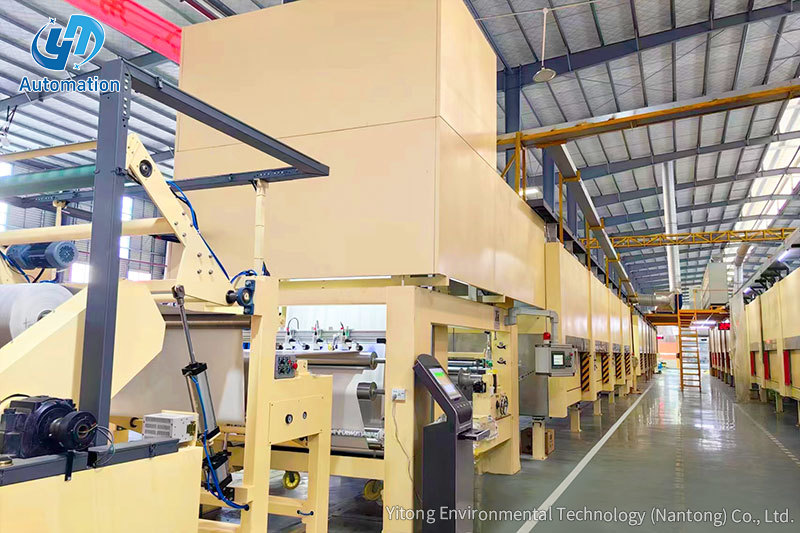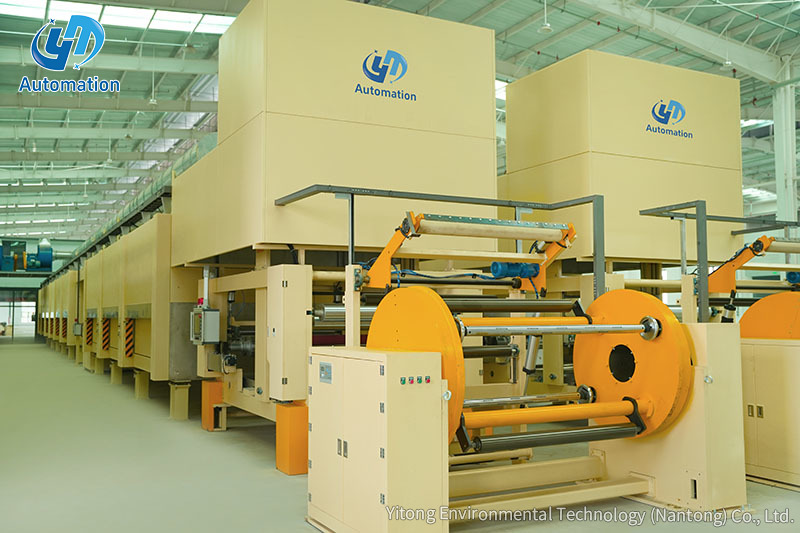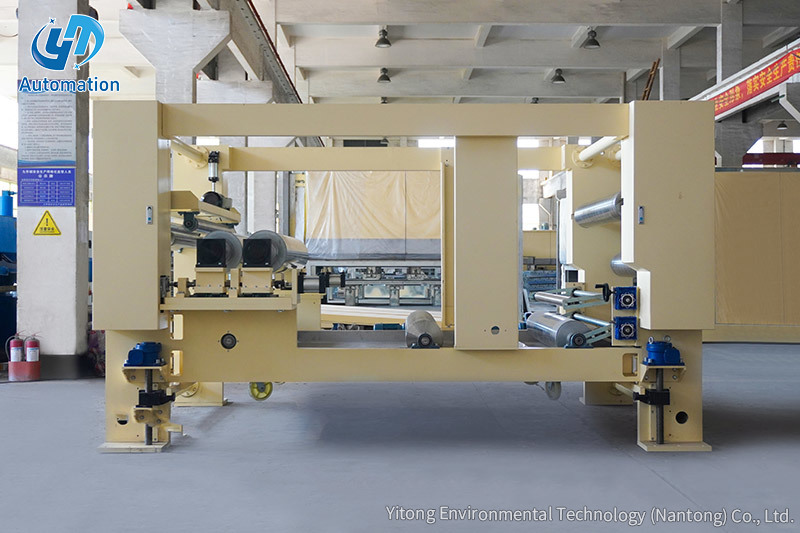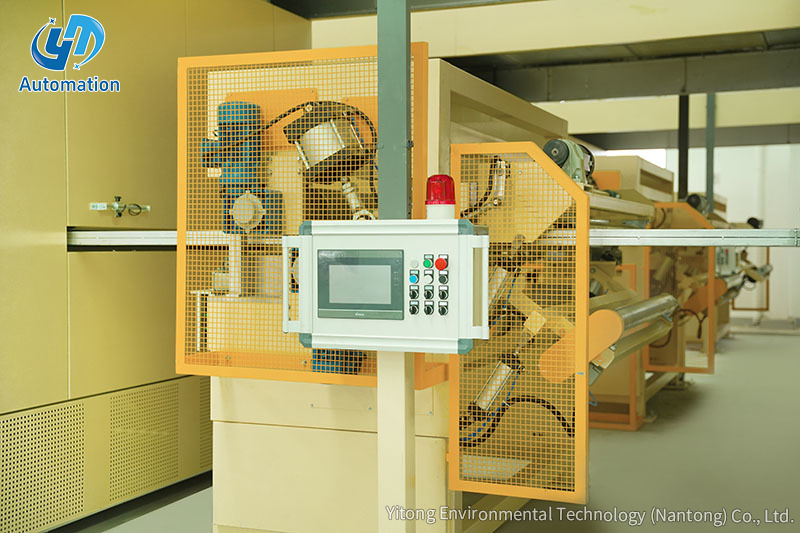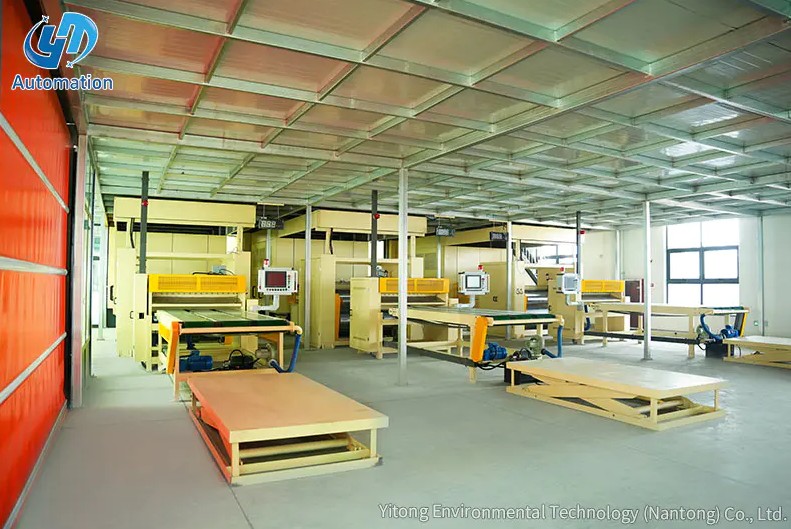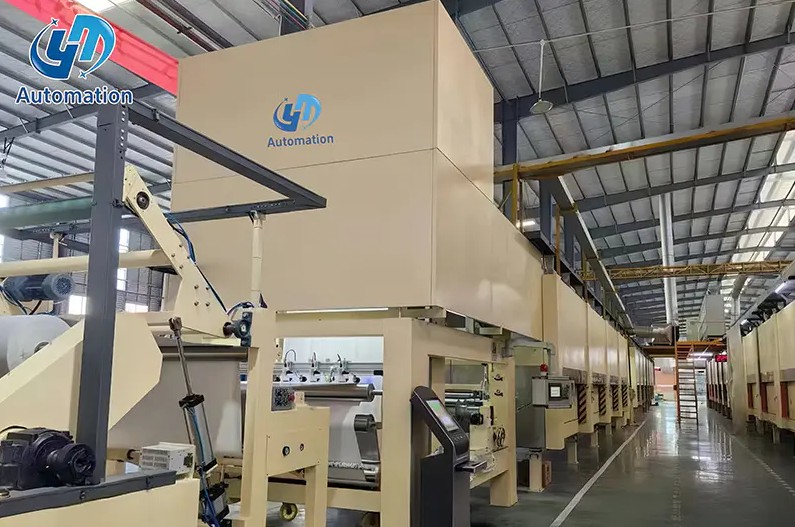
Picture a high-speed impregnation line running continuously for two shifts. The unwind reel empties, the paper is saturated and coated, and drying ovens do their work. Then the finished sheet reaches the end of the line, where a stack must be formed quickly, evenly, and without edge damage. This is the moment when an automated stacking system decides whether the whole line can keep its promised output.
The conclusion is straightforward: automation should be evaluated when line speed exceeds the comfortable pace of manual handling, because stack misalignment and repetitive lifting are common sources of later production losses. The sections below cover the working sequence, component choices, performance indicators, and integration considerations. Each section uses typical production data to make the comparison more concrete.
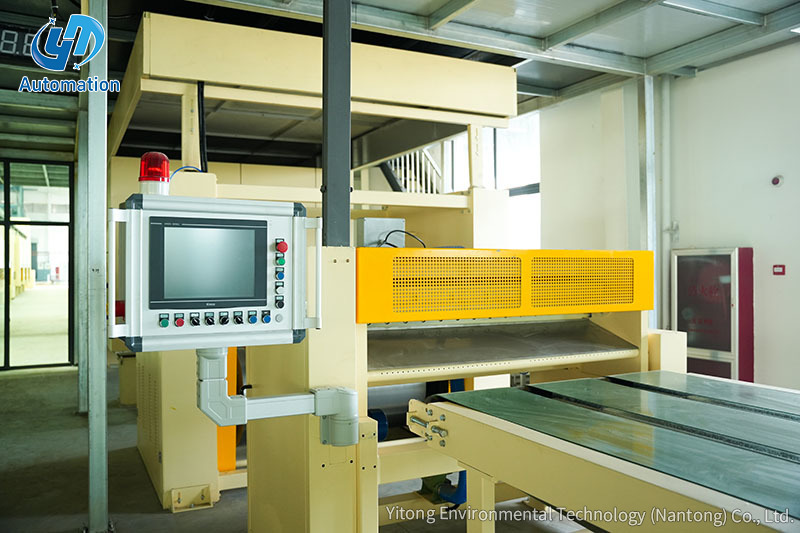
An automated stacking system is a programmable unit that receives panels or sheets from a feed conveyor and places them into a neat pile, pallet, or magazine. It can be a gantry frame with vacuum lifters, a single-column robot with a gripper, or a lifting platform that cooperates with a conveyor. The common thread is that the sequence is controlled by a PLC or industrial controller, not by an operator. The system uses sensors to detect the material, a positioning mechanism to move it, and a controller to coordinate the movement with the upstream line. These systems are used wherever flat products must be stacked quickly without damaging their surface.
The operating sequence follows the same logical pattern on almost every machine. A sensor at the infeed detects the leading edge and width of the sheet. The controller then calculates the target position based on the preset stack pattern. The vacuum or gripper system lifts the sheet, and the moving axis carries it to the drop point. The pattern is maintained by adjusting the deposit point for each cycle. Finally, the stack height measurement is checked after a preset number of pieces.
The timing is critical. If the controller waits too long between cycles, the upstream line stops. If it moves too fast, the sheet can sway and land offset. That is why the stiffness of the frame, the grip area, and the acceleration profile matter as much as the maximum speed.
Different line speeds, panel sizes, and floor layouts lead to different configurations. The right choice is not about brand preference but about which kinematic layout gives the shortest cycle with acceptable cost. The table below compares the most common types found in board and paper processing lines.
| System Type | Main Axis Movement | Typical Application | Cycle Time Range |
|---|---|---|---|
| Gantry-type panel stacker | Overhead X and Z axes | Wide panels, furniture boards | 12-18s per cycle |
| Single-column robot palletizer | Rotating arm with gripper | Compact spaces and varied patterns | 15-25s per cycle |
| Lifting-and-stacking platform | Vertical lift plus conveyor | Decorative paper stacks, impregnation lines | 20-35s per cycle |
| Conveyor-based stacker | Horizontal transfer with pile hopper | Light sheets and continuous lines | 25-45s per cycle |
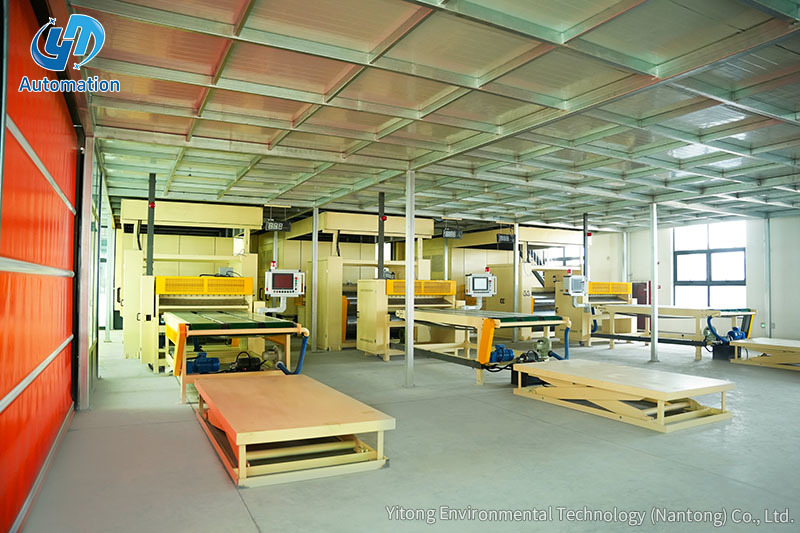 3-Ton Capacity Stacking Platform for Decorative Paper LinesThis platform-style stacker is presented as a practical choice for decorative paper lines, offering a 3-ton lifting capacity that supports simpler integration with existing PLC-controlled production systems.View Product →
When comparing types, the rated speed is only a starting point. The real cycle time depends on sheet weight, grip reliability, and how quickly the PLC can communicate with the upstream dryer or cutter. A platform-style stacker often becomes the first choice for decorative paper because it is simpler to integrate. If the product range later moves toward larger boards, a gantry system may become a better long-term option.
Once you know the movement pattern, the next step is to compare numbers rather than catalogue photos. Three metrics have the strongest effect on productivity: cycle time per sheet, stack quality at full height, and the amount of operator attention required. The chart below shows typical indexed performance when a gantry-type automated stacker replaces manual stacking on a continuous line.
The indexed values are based on real production observations. Manual stacking is set to 100 as a common baseline. Automated stacking typically reaches 140 or more for processing speed. Stack quality improves because every cycle uses the same coordinates and pressure. Even on labor efficiency, the automated line can run with one operator instead of several. This does not mean every machine will deliver these numbers, but they show the kind of gap a well-integrated system can create.
A single snapshot of performance is useful, but the trend over a shift matters more. Manual stacking tends to decline after the third hour, especially with high piece weights. An automated system maintains a nearly flat output curve. The line chart below compares the number of sheets stacked per hour at the end of each hour in a typical eight-hour shift.
The line chart illustrates a familiar pattern. The automated line stays between 44 and 47 cycles per hour throughout the shift. The manual line starts at 38 cycles but drops below 30 after the fourth hour. Fatigue, refreshment breaks, and pressure to keep pace all contribute to the curve. For a two-shift operation, the accumulated gap reaches about 80 sheets per line. This is why throughput claims based on short trials often overstate manual performance.
The next comparison focuses on average cycle time per stack. A shorter cycle gives the line a wider margin when the dryer output spikes. The bar chart below compares manual stacking, a lifting platform, a single-column palletizer, and a gantry stacker under similar sheet dimensions.
The vertical bars show cycle time in seconds per stack. Manual handling takes roughly 45 seconds because the operator must align, shift, and stop between sheets. A lifting platform reduces this to about 28 seconds by assisting the vertical movement. Single-column palletizers improve the value to 22 seconds, while gantry-type systems reach 18 seconds under favorable conditions. The trade-off is that faster machines usually have a larger footprint and higher investment. Selecting the right system depends on how many seconds are really worth saving in your production cost.
The best stacking system is not always the fastest one. If the line runs at moderate speed and the factory has limited floor space, a compact lifting platform may deliver the required output with lower installation risk. If the product range includes large boards and complex stack patterns, a gantry stacker gives more flexibility. The radar chart below compares two common options across five selection criteria: integration effort, payload capacity, flexibility, space efficiency, and cost. A higher score means the option is easier or stronger in that dimension.
The radar chart reveals why there is no universal winner. The lifting platform scores very high on integration and cost, making it a safe choice for existing impregnation lines. The gantry stacker wins on payload capacity and flexibility, which matters when panel sizes change frequently. Space efficiency is close because both formats require an outfeed zone. In practical terms, the decision should start with the range of sheet sizes and available headroom. After those constraints are clear, the scores usually settle the argument quickly.
An automated stacking system can be planned as part of a new line or retrofitted on an existing one. The easiest route is to select equipment that matches the conveyor height and control signals of your current line. Units such as a lifting-and-stacking platform fit well after the outfeed of a dryer or cutter section, because they replace the manual pallet position with a controlled vertical stroke. To move the finished stack away, a conveyor platform can be connected to the line controller. When the sequence is managed by a PLC, the stacker becomes another axis of the production process rather than an independent machine. With less manual intervention, the entire line achieves a more consistent rhythm.
Upstream equipment influences stack quality more than most buyers expect. If the tractor or feeding unit creates even a small speed variation, the stack edges will not stay flush. The design of the infeed conveyor, the cutting length, and the gripping area all need to be discussed with the equipment supplier. You can review a detailed discussion of how pulling units affect overall efficiency in our tractor efficiency analysis. The same logic applies to the conveyor platform that carries the finished stack away. A well-matched set of components is what separates a fast line from a smooth line.
An automated stacking system is a logical investment when manual handling limits the capacity of a production line. Start by measuring the current cycle time, stack quality, and operator cost. Then compare the types and performance data covered in this guide. The equipment should be selected to fit the real panel dimensions, available floor space, and control architecture of your line. When those points are aligned, automation pays for itself through higher throughput, better stack alignment, and lower labor pressure.
Déan Teagmháil Linn
Táirgí Molta
Rachaimid isteach
Dteagmháil
Is monaróir é Yitong Environmental Technology (Nantong) Co., Ltd atá ag speisialú i dtrealamh tuile.


Déan Teagmháil Linn
Phone: +86-19555016088
Email: díolachá[email protected]
Add:Ó dheas de Bhóthar Haiyan, Siar ó Bhóthar Nanhai, Crios Taispeána Comhfhorbartha Abhainn-Farraige Tongzhou Bay Yangtze, Jiangsu, an tSín