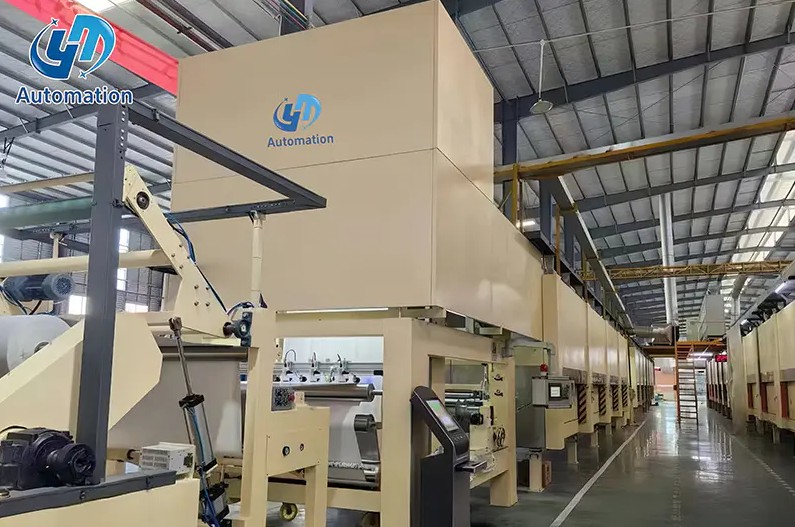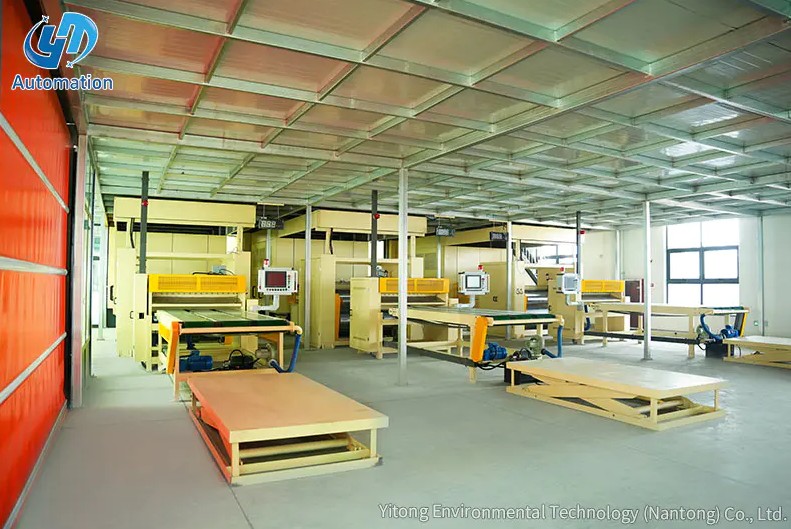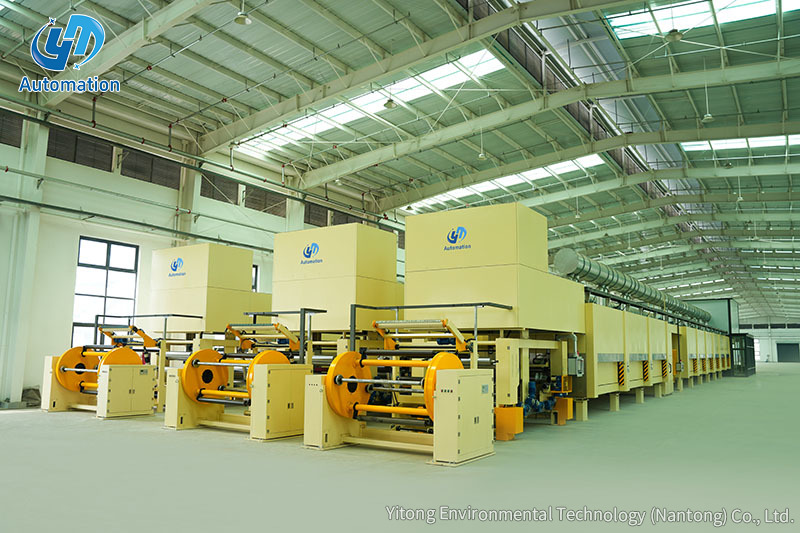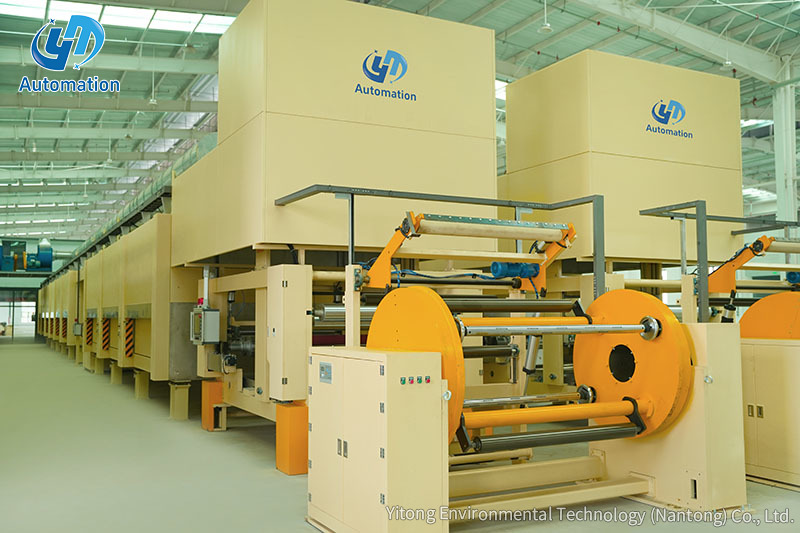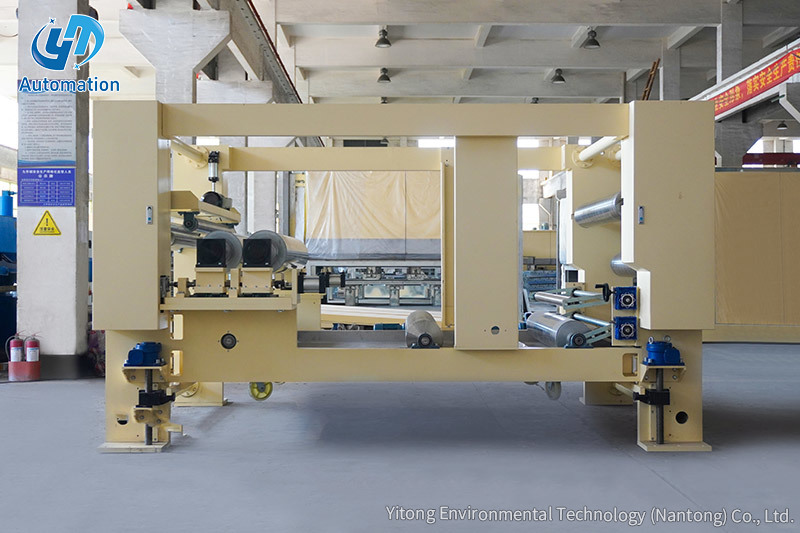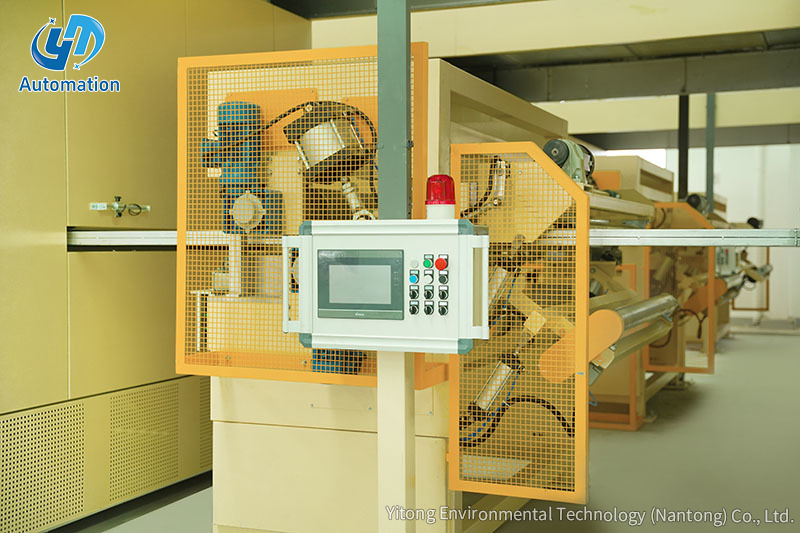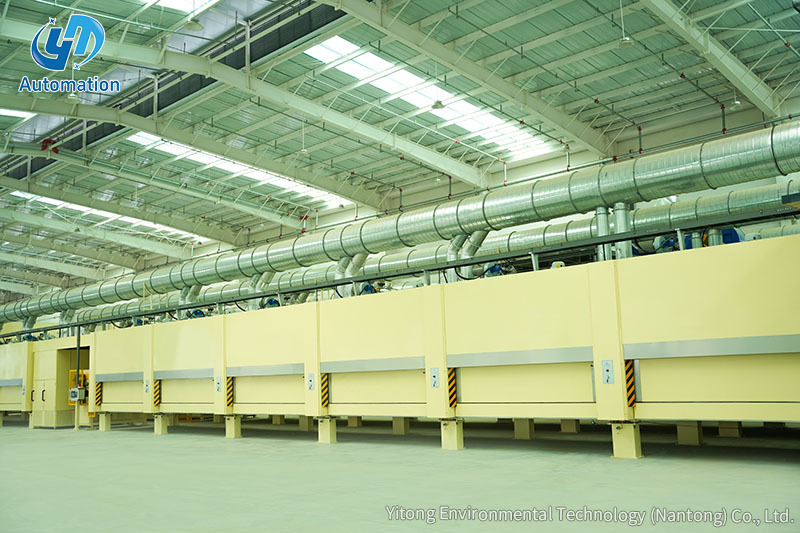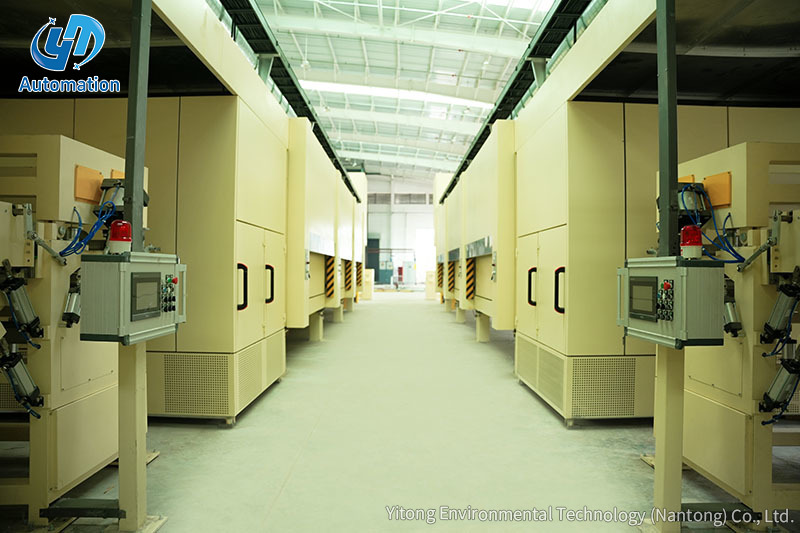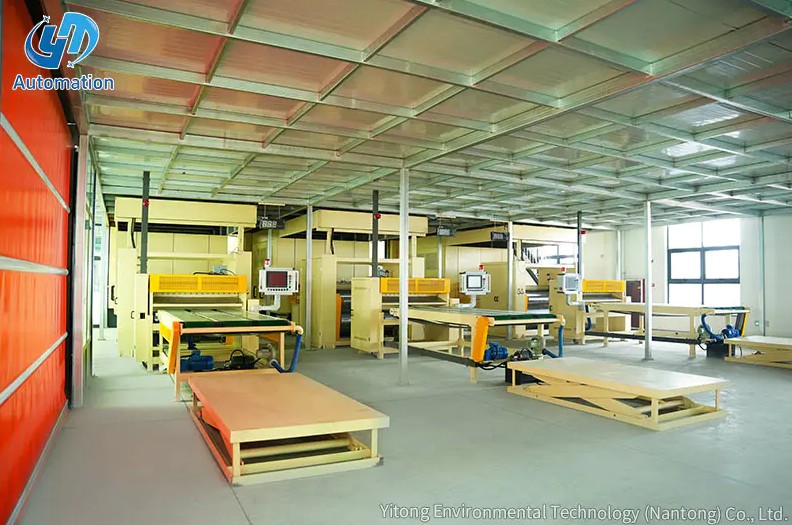
At the end of many impregnated decorative paper lines, a problem hides in plain sight. The unwinder feeds cleanly, the impregnation station applies resin evenly, and the drying section holds a stable temperature curve. Then the synchronous cutter finishes its cycle and finished sheets arrive at the stacking point faster than a manual team can handle. The line speed printed on the machine nameplate is no longer the real production speed. The stacking station has become the bottleneck, and every minute lost there is capacity that the line can never recover. For mills processing industrial decorative base paper, the decision to automate this station is a decision about real output, not about convenience.
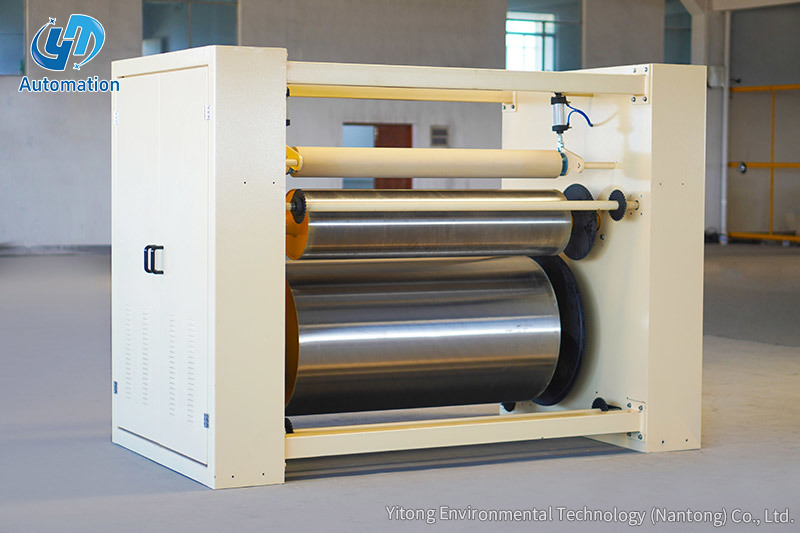
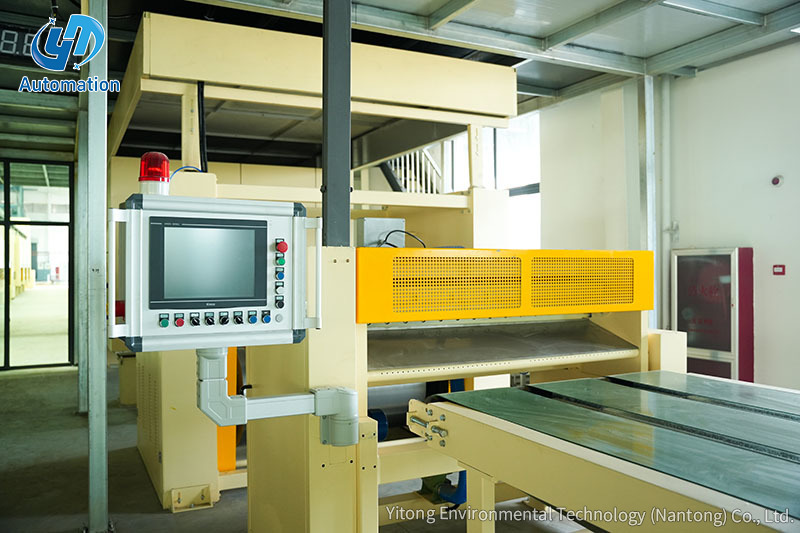
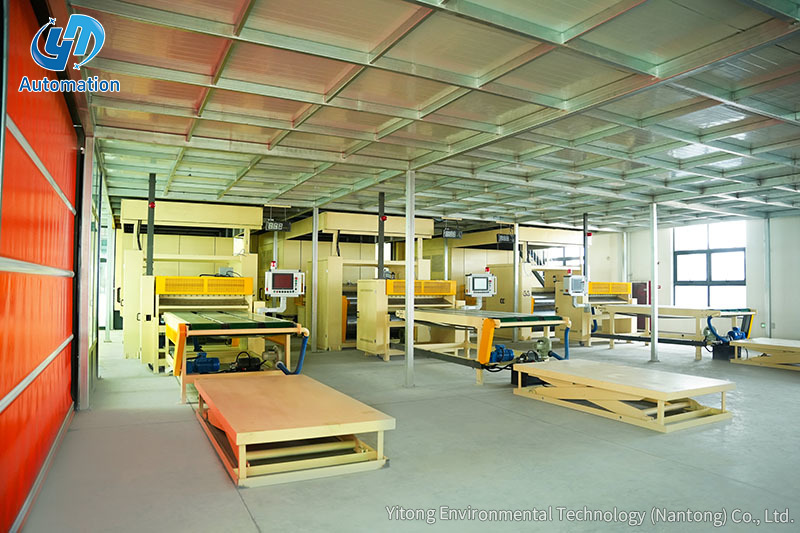
An automated stacking station receives cut sheets from the cutter or the last conveyor section, aligns every sheet against fixed reference edges, and places each sheet onto a lifting platform that lowers automatically as the stack grows. The entire cycle repeats without continuous operator action, which is why the station is best understood as a mechanical replacement for the slowest manual job in the line. A well-designed station performs five steps in a fixed sequence:
Stations of this kind are used on lines that produce resin-impregnated decorative paper, where the cured surface must not be scraped or friction-marked during handling. The mechanical design has to prevent sliding contact between sheets, which is why alignment and transfer tolerances matter as much as speed.
Total line output is determined by the slowest shared step, and in most decorative paper plants that step is stacking. A synchronous cutter can produce 25 to 35 sheets per minute at normal line speed. A two-person manual stacking team, even with regular rotation, rarely sustains more than 9 to 10 sheets per minute over a full shift. The output gap between the cutter and the stacker is usually larger than the gap between any other pair of consecutive machines.
The bar chart compares typical stacking throughput for three operating modes. Manual stacking peaks at nine sheets per minute when two experienced workers rotate regularly. A semi-automatic arrangement with assisted lifting reaches about 18 sheets per minute. A fully automated station sustains 30 sheets per minute without pauses for fatigue or shift rotation. Over eight hours, that gap equals more than 10,000 sheets per shift on a line that keeps the cutter fully fed. The stacking station must therefore be sized to the cutter rating, not to what two pairs of hands can sustain.
The reliability of an automated stacking station depends on five mechanical and control systems working within a tight cycle time. Each component has a specific tolerance that determines whether the station can follow the cutter hour after hour without jams or edge damage.
| Component | Function | What to verify |
|---|---|---|
| Receiving conveyor | Carries each sheet from the cutter to the alignment area at a controlled speed | Speed range matches the cutter output and the belt material does not scratch the sheet |
| Side alignment device | Pushes each sheet against reference stops to create a consistent edge | Positioning tolerance within 1 mm and a cycle time under 1.5 seconds |
| Lifting and transfer mechanism | Moves the aligned sheet onto the stack without sliding | Smooth vertical motion and no dragging that would mark the resin surface |
| Stacking platform | Supports the growing stack and lowers automatically | Maximum stack height and weight match the bundle size and fork truck access |
| PLC control system | Coordinates the sequence, counts sheets, and communicates with the line | Compatibility with existing line signals and simple recipe changeover |
When evaluating a supplier, ask for the positioning tolerance, the cycle time per stroke, and the maximum stack weight in writing. These three numbers decide whether the station can keep pace with your cutter over a full production month. Yitong builds the lifting and stacking platform as a standalone unit, so it can replace a manual stacking point without changing the rest of the line.
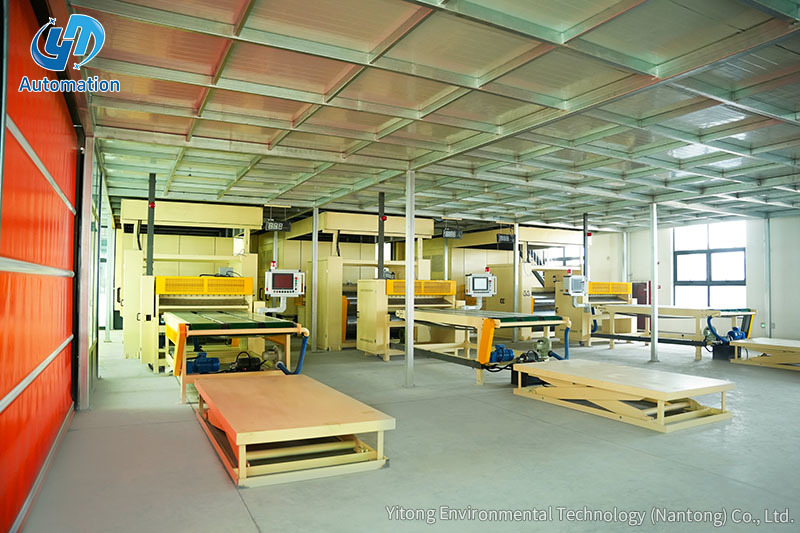 Stacking Platform for Impregnated Decorative Paper with 3-Ton Lift CapacityThis standalone lifting and stacking unit handles up to 3 tons, making it a practical upgrade for manual stacking points. It pairs with existing lines and supports cutter pace while keeping tolerance, cycle time, and stack weight criteria in mind.View Product →
The right choice depends on shift structure, sheet volume, and how much variability the floor can tolerate. A plant running short custom orders may justify manual stacking longer than a plant running three shifts of standard formats. The comparison below is a practical starting point.
| Criterion | Manual | Semi-automatic | Automated station |
|---|---|---|---|
| Operators per shift | 3 | 2 | 1 |
| Sustained throughput | 8 to 10 sheets per minute | 15 to 20 sheets per minute | 25 to 35 sheets per minute |
| Stack consistency | Depends on the operator | Moderate | High and repeatable |
| Damage risk | Rises with fatigue | Moderate | Low and stable |
| Initial investment | None | Low to medium | Higher |
| Best suited for | Short runs and low output | Medium volume lines | Continuous high-volume production |
The line chart shows how sheet damage rates evolve during an eight-hour shift. The orange line represents manual stacking, starting below one percent and climbing past six percent as fatigue accumulates. The blue line represents an automated station, holding a consistent rate below half a percent from the first hour to the last. The rising trend in manual operation comes from slower reactions and repetitive motion near the end of the shift. For producers who grade finished sheets, this difference directly affects first-grade output. The damage curve often matters more economically than the nameplate line speed.
The radar chart compares manual and automated stacking across six operating dimensions. Automated stacking scores higher in speed, consistency, operator safety, and floor space efficiency, because the station uses a compact footprint and needs no temporary storage around the work area. Manual stacking remains stronger in flexibility, since a person can adapt to irregular sheet sizes without a program change. Ease of integration is the only dimension where manual operation appears simpler, because it needs no control interface with the cutter. The overall shape explains why most new decorative paper lines specify an automated station even when the first quotation is higher. The real trade-off is changeover discipline and control planning, not mechanical capability.
Match the station to your real sheet size range and stack cycle, not only to the rated line speed. A station sized for a maximum sheet length of 2800 mm will run poorly if your most frequent format is 1400 mm and the recipe changes every two hours. The checklist below covers the points that cause the most trouble after installation.
The vertical bar chart compares the number of operators required per shift for three arrangements. A manual station typically occupies three people, two at the stack and one alternating at the infeed. A semi-automatic station needs two operators who supervise and assist during format changes. An automated station runs with one operator, and in many plants that person also supervises the cutter and the discharge area. Across three shifts, the difference between manual and automated staffing is six people per day. Where skilled line workers are hard to find, this staffing gap often decides the investment.
Most problems with automated stacking stations appear after installation, not during the sales discussion. The following mistakes come up repeatedly on decorative paper lines and can be avoided with a tighter specification.
Another frequent issue is buying a station with the wrong reference edge for the existing floor layout. Confirm the operator side, the discharge side, and the maintenance clearance before the final drawing is approved.
An automated stacking station is one of the fastest-paying investments in a decorative paper line because it removes the most common bottleneck without changing the upstream chemistry or drying profile. For mills evaluating their options, starting with a stacking platform and then expanding to a complete line is often the lower-risk path. Yitong's factory capability covers both the standalone station and the full impregnation line, with a cumulative record of more than 1,000 project cases. A station that matches the cutter, the sheet format range, and the shift structure will protect the line output that upstream machines already paid for.
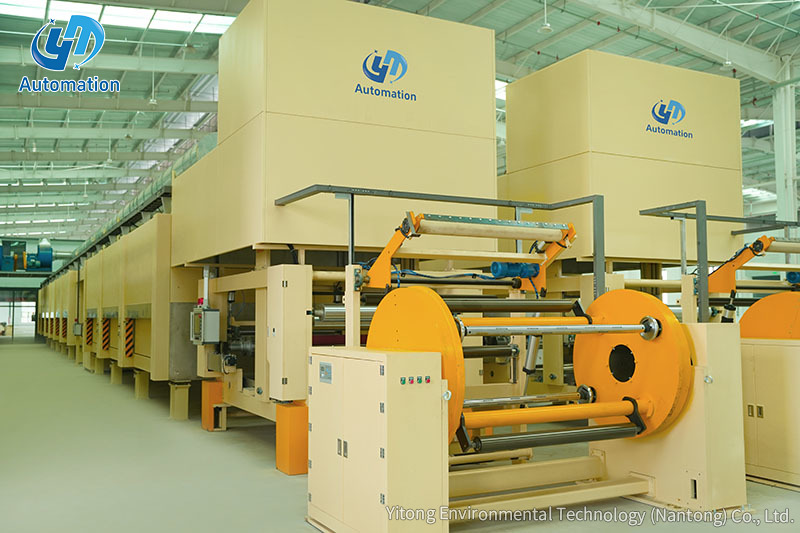 One-Stage Impregnation Line for Melamine Paper ProductionThis horizontal impregnation and drying line covers unwinding through lift stacking and offers energy savings via a permanent magnet motor and heat recovery. It suits high-pressure melamine boards, especially bottom-layer paper, with uniform coating.View Product →
Déan Teagmháil Linn
Táirgí Molta
Rachaimid isteach
Dteagmháil
Is monaróir é Yitong Environmental Technology (Nantong) Co., Ltd atá ag speisialú i dtrealamh tuile.


Déan Teagmháil Linn
Phone: +86-19555016088
Email: díolachá[email protected]
Add:Ó dheas de Bhóthar Haiyan, Siar ó Bhóthar Nanhai, Crios Taispeána Comhfhorbartha Abhainn-Farraige Tongzhou Bay Yangtze, Jiangsu, an tSín